
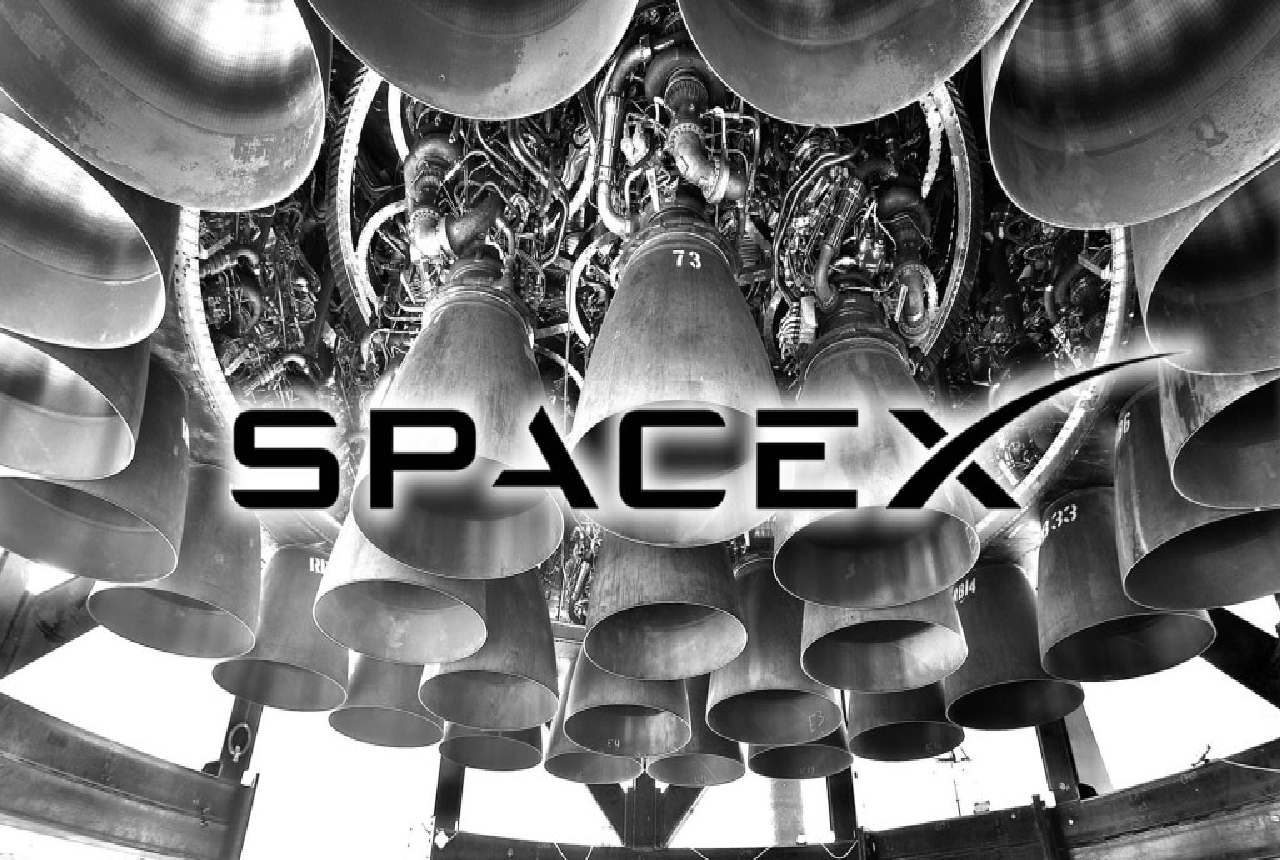
In an email sent to SpaceX employees, obtained by Space Explored, Elon Musk
addressed the ‘crisis’ of Starship Raptor engine production and said the
company could face a ‘genuine risk of bankruptcy’ if the company is unable to
achieve a Starship flight rate of once every two weeks next year.
SpaceX is currently developing its next rocket, Starship, down in Boca
Chica, Texas. Starship is the vehicle that Musk plans to take humanity to
Mars with, and first, it will return humans to the surface of the Moon as
the lunar lander for the Artemis program. But before Starship can carry
humans anywhere, SpaceX will need to resolve its engine production issues.
The company is having trouble with the production of its Raptor engine - a
full-flow staged combustion Methane engine - for the Starship vehicle. The
production issues have become even more pronounced, as Musk outlined in a
recent email that has been obtained by Space Explored.
Musk focused on Raptor production
Musk, known for his work ethic and refusal to take holidays (and sleeping on
the factory floor) had actually planned to take a break this Thanksgiving
weekend, but these issues changed that:
Unfortunately, the Raptor production crisis is much worse than it had seemed a few weeks ago. As we have dug into the issues following the exiting of prior senior management, they have unfortunately turned out to be far more severe than was reported. There is no way to sugarcoat this.
I was going to take this weekend off, as my first weekend off in a long time, but instead, I will be on the Raptor line all night and through the weekend.
This ‘senior management’ that left is likely referring to Will Heltsley,
former SpaceX senior vice president of propulsion. As
CNBC reported, he left Raptor production due to a lack of progress. In addition, former
SpaceX vice president of mission and launch operation Lee Rosen and senior
director of mission and launch operations Rick Lim have left the company.
Raptor engine production is now being led by Jacob Mackenzie, who has been
with the company for over six years.
Musk continued the email asking employees for all hands on deck:
Starship needed for Starlink V2
Unless you have critical family matters or cannot physically return to
Hawthorne, we will need all hands on deck to recover from what is, quite
frankly, a disaster.
The consequences for SpaceX if we can not get enough reliable Raptors made
is that we then can’t fly Starship, which means we then can’t fly Starlink
Satellite V2 (Falcon has neither the volume nor the mass to orbit needed for
satellite V2). Satellite V1, by itself, is financially weak, while V2 is
strong.
In addition, we are spooling up terminal production to several million units
per year, which will consume massive capital, assuming that satellite V2
will be on orbit to handle the bandwidth demand. These terminals will be
useless otherwise.
These newer satellites are larger. SpaceX has been flying V1.5 satellites
recently. SpaceX has been able to save money by being its own launch
provider, however, Musk’s statement that “Satellite V1 by itself is
financially weak” is important to note. Even on Starlink user terminals
alone, the company was losing almost $1,000 per customer at first. The
company has since brought costs down and launched a new user terminal, but
it was operating at a major up-front loss in order to build a customer base
for the satellite internet constellation in low-Earth-orbit. That’s not even
considering the millions per Falcon 9 launch and the actual cost of the
satellites in orbit, which Musk is saying will improve with V2 and Starship.
Risk of bankruptcy
Musk closed out the email with a dire message:
What it comes down to, is that we face a genuine risk of bankruptcy if we can’t achieve a Starship flight rate of at least once every two weeks next year.Thanks,Elon
We have reached out to SpaceX with a request for comment, and the company
has not responded.
The email came, of all times, over Thanksgiving weekend. A time people are
trying to spend with their families, and are instead are being called back
to address Raptor production issues.
This also comes as SpaceX has been viewed as wildly successful from the
outside. The company recently passed a $100 billion valuation, took its
Starlink program out of beta, and is back to working with NASA on the
Starship lunar lander, as Blue Origin’s lawsuit has concluded.
Starship is essential to SpaceX’s future. While Falcon 9 is the current
workhorse of the company and has been wildly successful, the move to a fully
reusable rocket will allow SpaceX to launch even more payloads at a lower
cost, it if can see success.
The Starship test program happens out in the open, where onlookers can see
the company’s successes and failures. The exploding earlier prototypes drew
a lot of attention before the successful flight of SN15, but the company
still has a long way to go before it has a successful orbital test, let
alone a solid production schedule for Starship.
Starship tiles
The company’s Starship 20 prototype, which is set to go on an orbital test
flight next year, is not expected to survive. The Starship is set to
soft-splashdown in the water off the coast of Hawaii, but it is not likely
to make it that far. We previously reported on the Starship tiles flying off
the vehicle during tank vent, and the experimentation on tile production. We
wrote:
The current tiles and attachment system seem prone to cracking and falling off, which won’t work if Starship 20, and future Starships, are to survive reentry. SpaceX will need to figure out how to reliably produce more robust thermal tiles and mount them if SpaceX is to fully kit out multiple Starships. SpaceX seems to be doing just that. A slight color variation in the tiles is due to SpaceX experimenting with production.
These tiles have not survived the testing, and Starship 20 is expected to be
destroyed on reentry. In order to combat this, and to get useful data from
the flight, it is rumored that SpaceX will deploy a copy of the recorded
telemetry from Starship during reentry - a black box of sorts.
SpaceX has a long way to go before it achieves a successful orbital flight
of Starship, and the flight every two weeks for Starship next year seems
like an ambitious goal, so to say the company will face a ‘genuine risk of
bankruptcy’ if the company cannot achieve that flight-rate is a sign of the
dark times at SpaceX.
An industry expert commented on the email, and SpaceX’s development style,
telling Space Explored that:
When your goal is to blow up and break [stuff] you spend way way more. Learn more and build a great product but the cost is way higher.
SpaceX’s style is rather unique in the industry but has thus far led the
company to success.
Elon has also recently been pulling his money out of Tesla stock. While some
of this was pre-scheduled, and he used a Twitter poll to ‘guide’ his
decision, it is possible he could use this to personally fund SpaceX, in
order to address any possible financial difficulties within the company.
Space Explored’s take
Don’t for a minute take Elon’s mention of bankruptcy at face value. The fact
that Musk is putting this level of importance on Starship rapidly
progressing soon is actually a good indicator of what’s to come in the next
several months.
2022 will surely be a pivotal year for SpaceX’s next-generation rocket.
Going back to its original Falcon 1 rocket project, SpaceX has historically
reached major milestones when its fate depends on it.
Despite what the email says, if Starship isn’t actually flying every 14 days
by the end of next year SpaceX’s won’t literally go under. Rather, Elon Musk
is sharing the pressure that the timeline is necessary to keep the company
on its ambitious path without scaling back operations that aren’t profitable
yet.
Put another way, no one should leave with the takeaway that SpaceX’s
Commercial Crew and Commercial Cargo contracts are at risk, nor should one
use this to make the case that the Human Landing System contract should not
have been awarded to SpaceX.
Starship is an ambitious project with an aggressive timeline that SpaceX
believes makes up for decades of lost time toward progressing in space
exploration - and more importantly to Musk, making life multi-planetary.
The last time this much pressure was put on SpaceX as a company happened
shortly after they sent astronauts to the space station for the first time.
Elon Musk told employees that Starship was now the ‘top SpaceX priority’
while asking anyone willing to move to Texas to work directly on the project
… and look how much progress Starship has made since then.